1861 LIBERATOR abolitionist newspaper names SLAVERY asTHE CAUSE of the CIVIL WAR
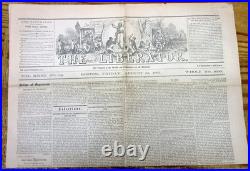
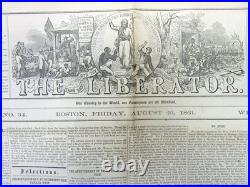
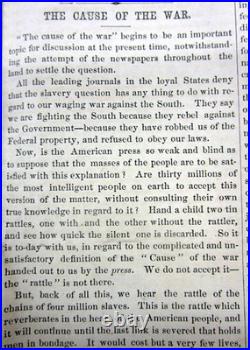
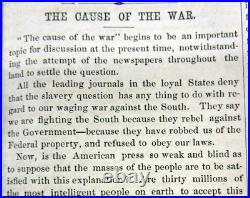
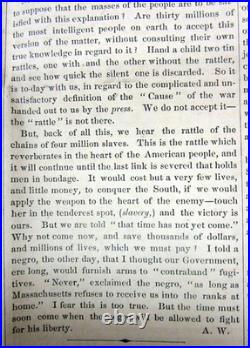
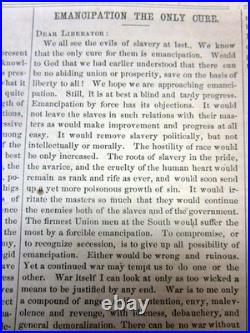
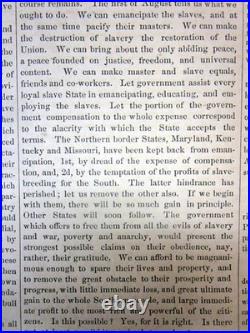
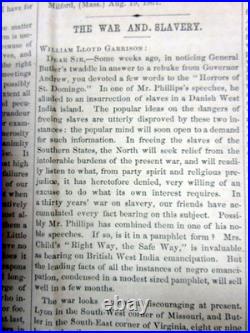
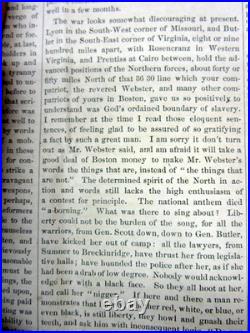
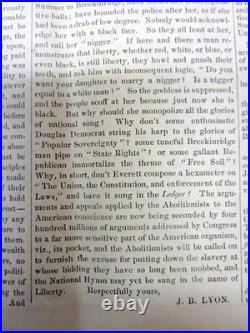
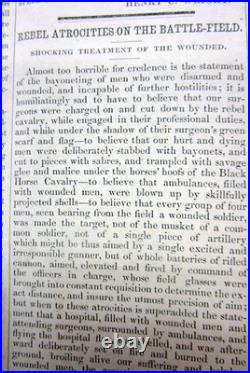
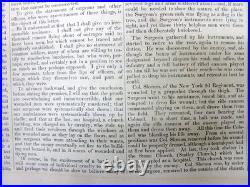
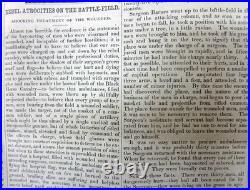
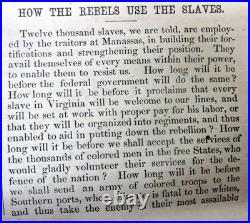
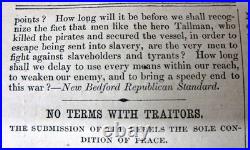
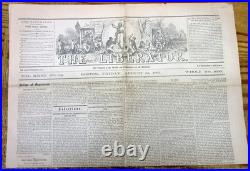

1861 LIBERATOR abolitionist newspaper names SLAVERY asTHE CAUSE of the CIVIL WAR. 1861 LIBERATOR abolitionist newspaper names SLAVERY as THE CAUSE of the CIVIL WAR. SEE PHOTO(s) - COMPLETE ORIGINAL Civil War era anti-slavery NEWSPAPER, the. (Boston, MA) dated Aug 23, 1861.
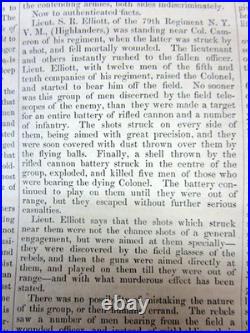
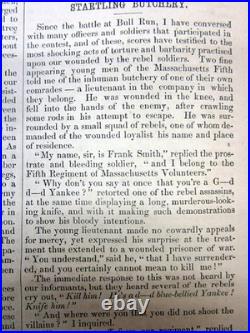
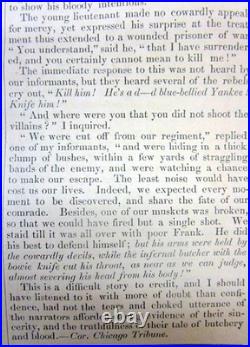
This original newspaper contains a report naming. SLAVERY as the CAUSE of the CIVIL WAR. It also contains many reports on the CRUELTIES of the Confederate "rebels" at the Battle of First Bull Run (Manassas, VIRGINIA).Interesting anti-slavery newspaper with a contemporary report of slavery as the cause of the Civil War. Slavery was the root cause of the Civil War.
By 1861, profound economic, cultural, and political divisions over the institution of slavery led the southern states to secede and form the Confederacy, sparking the conflict. The primary components driving the nation to war included. Election of 1860: The election of Abraham Lincoln-whose platform aimed to prevent the expansion of slavery into western territories-convinced southern leaders that their way of life was in danger.
Secession: Fearing that Lincoln's victory signaled the end of slavery, South Carolina seceded in December 1860. Ten other states followed, directly citing the preservation of slavery as their primary motivation. The Confederate Constitution: Formed in February 1861, the Confederacy drafted a constitution that explicitly protected the institution of slavery and guaranteed the right to hold enslaved people.
The "Cornerstone Speech":In March 1861, Confederate Vice President Alexander Stephens stated that slavery, and the belief in white supremacy, was the "cornerstone" of the newly formed Confederate government. Fort Sumter: When the U. Government under President Lincoln refused to abandon federal property in southern states, Confederate forces fired on Fort Sumter in Charleston, South Carolina, in April 1861, officially beginning the war.
While President Lincoln's initial goal in 1861 was to preserve the Union, the overarching issue that fractured the country and made the war inevitable was slavery. Following the Union defeat at the First Battle of Bull Run (First Manassas) on July 21, 1861, sensationalist Northern newspapers published explosive allegations that Confederate soldiers committed "cruelties, " including mutilating Union corpses and the alleged desecration of Union graves for trophies.Grave Desecration: Northern media widely reported-and many citizens believed-that Confederate troops dug up Union dead at Bull Run to fashion drinking cups and trinkets from human bone. Symbolic Propaganda: These rumors shocked the Northern public and inspired fiery political cartoons in prominent publications like Harper's Weekly and Frank Leslie's Illustrated Newspaper.
The "Skull Cup" Myth: The most famous and extreme rumor claimed Confederates used the skull of slain Union Colonel James Cameron (brother of Lincoln's Secretary of War, Simon Cameron) as a drinking bowl. "Black Flag" Attitude: Accusations circulated that Confederate soldiers operated under a "black flag" mentality, refusing to take prisoners and bayoneting wounded Union men where they fell on the battlefield. Lack of Medical Access: While accounts of malice and deliberate cruelty were largely a mix of wartime panic and propaganda, the reality was still grim.
Many Union wounded were abandoned on the field and left to die because the chaotic retreat left Union surgeons without adequate transportation or protection to recover their men. Historical Consensus Most modern historians view the reports of systematic Confederate atrocities at Bull Run as heavily exaggerated by the Northern press to boost wartime recruitment and demonize the enemy. However, the stories left a profound psychological impact on the nation, hardening both sides for the realities of a long, bloody conflict. Religious rather than political, it appealed to the moral conscience of its readers, urging them to demand immediate freeing of the slaves ("immediatism"). It also promoted women's rights, an issue that split the American abolitionist movement.
Despite its modest circulation of 3,000, it had prominent and influential readers, including Frederick Douglass, Beriah Green and Alfred Niger. It frequently printed or reprinted letters, reports, sermons, and news stories relating to American slavery, becoming a sort of community bulletin board for the new abolitionist movement that Garrison helped foster. Garrison co-published weekly issues of The Liberator from Boston continuously for 35 years, from January 1, 1831, to the final issue of December 29, 1865. Although its circulation was only about 3,000, and three-quarters of subscribers (in 1834) were African Americans, the newspaper earned nationwide notoriety for its uncompromising advocacy of "immediate and complete emancipation of all slaves" in the United States.This listing includes the complete entire original newspaper, NOT just a clipping or a page of it. Every item we sell is an original newspaper printed on the date indicated at the beginning of its description. This is truly SIX CENTURIES OF HISTORY that YOU CAN OWN! Goldman is a consultant to the Freedom Forum Newseum and a member of the American Antiquarian Society. Let our 50+ years of experience work for YOU!
We have hundreds of thousands of historical newspapers (and their very early precursors) for sale. We are located in the charming Maryland Eastern Shore town of OXFORD, Maryland. With an inventory of nearly a million historical newspapers (and their early precursors) we are likely have just the one YOU are searching for.
WE ARE ALSO ACTIVE BUYERS OF HISTORICAL NEWSPAPERS, including large and small personal collections, bound volumes, significant individual issues, or deaccessions from libraries and historical societies. Powered by SixBit's eCommerce Solution.